Monday, February 21, 2011
Gov. Scott Walker Sits Down With Heritage and Answers the Tough Questions
Teachers’ unions and representatives of every liberal interest group in the country may have taken over the streets of Madison for demonstrations, marches and speeches, but inside the Wisconsin governor’s mansion its chief tenant remains calm and resolute. The Badger State’s budget will be balanced, Gov. Scott Walker (R) assured The Heritage Foundation in a one-on-one interview. The stakes in Wisconsin are high not just here, but across America.
“I’ve said all along the protesters have every right to be there, but I’m not going to let tens of thousands overload or overshadow the millions of people in Wisconsin, the taxpayers of the state, who want us to do the right thing and balance the budget,” Gov. Walker told us.
Fourteen state Senate Democrats fled to Illinois last week, preventing a quorum and blocking passage of Walker’s budget repair bill. But that doesn’t dissuade Gov. Walker. He told Heritage he would prefer to see the stalemate last indefinitely rather than compromise on his principles.
For the strength to stand so firmly, Gov. Walker said he draws on his past experience as Milwaukee County executive—a fiscal conservative leading a county that voted overwhelmingly for President Obama in 2008 by a margin of 67% to 32%.
The political role model Gov. Walker looks up to is also important, as it is none other than President Ronald Reagan. Of Reagan, Gov. Walker said, “He knew who he was, he knew where he was going and he did what he had to do to get there.”
Reagan was no stranger to bold and difficult decisions, and Gov. Walker said he was prepared to follow in the former president’s footsteps for as long as he served in office.
In 1981, about six months after taking office, Reagan defined the tenor of his administration with his own bold decision to fire more than 11,000 air traffic controllers who ignored the president’s orders to return to work. Reagan emerged victorious, his presidency emboldened by the conflict.
The stakes were high for Reagan then—he risked an enormous public backlash by disrupting commercial air travel—and they’re high for Gov. Walker now. In many ways, Wisconsin will be the prototype for other deficit-laden states whose leaders attempt to balance their budgets.
Gov. Walker is aware of just what Wisconsin—and the rest of the country—stands to gain or lose with the ultimate outcome of this debate. That’s precisely why he insists the outcome be a balanced budget. For that, he’ll endure personal insults, the comparisons to deposed Egyptian leader Hosni Mubarak and Nazi dictator Adolf Hitler. He’ll face days of chanting outside his window and threats to his safety.
In fact, Gov. Walker is not merely enduring—he’s “feeling good,” he said. He’s even found something in common with the protesters: They share the same taste in music. The songs blaring over the loudspeaker take him back to his college and high school days.
The music’s not the only aspect of the protests Gov. Walker appreciates. He’s also grateful they’ve remained peaceful—even this weekend, when his supporters turned up to counter the protesters. Maybe that’s why Gov. Walker seems so grounded even in the midst of the churning: He’s appreciative of, rather than worried about, what the protests signify—that the people of Madison, those on both sides of the issue, care enough to come to the Capitol to debate.
But that’s where he draws the line, promising to remain committed to his principles in the face of adversity. “We have to be clear and realistic about our challenges,” he said, “but optimistic about our solutions.”
Sunday, February 6, 2011
Saturday, February 5, 2011
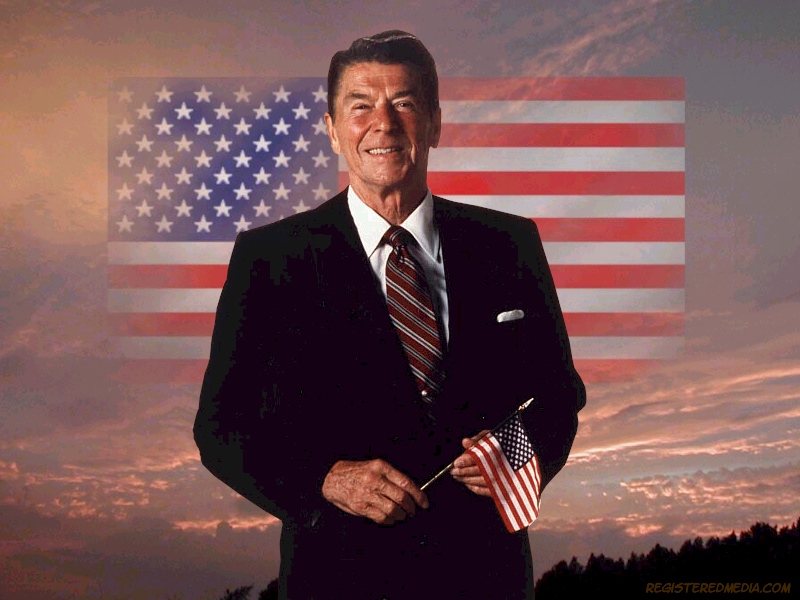
Feulner on Reagan at 100
Consider how Reagan's name surfaced repeatedly after the most recent State of the Union address as pundits - both liberal and conservative - weighed the speech's effectiveness. His Photoshopped image is on the cover of Time, his arm draped around President Obama.
"If Obama has bounced back from the drubbing his party took at the polls last November," Richard Norton Smith writes in the magazine, "it is in no small measure because he has been acting positively Reaganesque as of late."
Acting, perhaps, but not governing. It's worth reminding ourselves as we mark the centennial of Reagan's birth what he accomplished - and how.
It's important to do this in part because much of what passes for praise of Reagan is veiled criticism. Reagan is hailed, for example, as a great communicator. And with good reason: Few politicians could match his rhetorical skill and his ability to articulate great themes that resonated with the American people.
But that's where many on the left stop. What they really seek to emulate is not his policies or his agenda. They hope that if they study his methods, a little of his "magic" will rub off on the liberal policies that have proved such a hard sell over the past two years. Dress the liberal agenda in Reaganesque terms, and the electorate is yours, right?
What condescending nonsense. It wasn't just Reagan's ability to communicate that endeared him to millions of Americans. It was the fact that he was articulating their most deeply cherished beliefs. It went well beyond the optimistic outlook - which, although welcome, is something any president can attempt. It was because he spoke in direct terms that avoided the usual buzzword approach we get from Washington.
He used that approach to say what many Americans thought: Taxes are too high - let's cut them. Inflation is too high - let's tame it. The Cold War can be won, not managed, and the world made safer for everybody - let's do it.
The fable of the left (the hard left, anyway - many others are coming around) is that this was all smoke and mirrors. But the facts tell a different story. Starting from the "stagflation" mess his predecessor handed him, Reagan created a genuine economic miracle. After a three-stage tax cut and a reduction in government growth, our economy began to expand - by 31 percent from 1983 to 1989 in real terms. Americans of every class - rich, middle-class and poor - saw their wealth increase.
It was our nation's longest peacetime expansion in a long and prosperous history. By decade's end, we had added the economic equivalent of a new Germany to our gross national product. Inflation was cut by two-thirds, interest rates by half. Unemployment dropped to the lowest level in 15 years.
Even before the end of his first term, the signs of distinct progress were unmistakable. Small wonder that Reagan's famous "Morning in America" campaign resonated with so many voters, leading to a landslide re-election in 1984. Starting from the "stagflation" mess his predecessor handed him, Reagan created a genuine economic miracle.
People loved him for it. That's why so many politicians, both Republicans and Democrats, seek to portray themselves as latter-day Reagans. To decide whether they deserve this mantle, however, consider this quote from his farewell address:
" 'We the people' tell the government what to do; it doesn't tell us. 'We the people' are the driver, the government is the car. And we decide where it should go, and by what route, and how fast."
Only a politician who agrees with this - and governs accordingly - can be considered Reagan's true heir.
Ed Feulner is president of the Heritage Foundation (heritage.org).
Friday, February 4, 2011
The Classical Virtues of Ronald Reagan
The best political leaders embody the classical virtues of courage, prudence, justice, and wisdom. President Ronald Reagan had all these qualities and in abundance.
Courage
When he was shot on March 30, 1981, President Reagan seemed to spend most of his time reassuring everyone that he was not seriously hurt, although the bullet had stopped only one inch from his heart and the doctors were very concerned about his substantial blood loss. As he was wheeled into the operating room, he noted the long faces of his three top aides—James Baker, Ed Meese, and Michael Deaver—standing in the hall and asked, “Who’s minding the store?” When a distraught Nancy Reagan made her way to him, he lightly said, “Honey, I forgot to duck.”
Both conservative and liberal commentators lauded Reagan. “The president’s imperishable example of grace under pressure,” wrote George Will, “gave the nation a tonic it needed.” “Everybody knows,” wrote James Reston of The New York Times, “that people seldom act in the margin between life and death with such light-hearted valor as they do in the movies. Yet Ronald Reagan did.”
It also takes courage to challenge an enemy like the Soviet Union when the stakes are high. There was vehement Soviet opposition to his Strategic Defense Initiative (SDI), but the President did not budge. At the Reykjavik summit, when both sides were very close to a far-ranging agreement on nuclear weapons, Soviet leader Mikhail Gorbachev pressed hard for laboratory testing only of SDI. Reagan refused. His steadfast commitment to SDI convinced the Kremlin that it could not win, or afford, a continuing arms race and led to an end of the Cold War at the bargaining table and not on the battlefield.
Prudence
Rather than dispatching American combat troops to trouble spots, Reagan assisted pro-freedom anti-Communist forces in Afghanistan, Nicaragua, Angola, and Cambodia. National security analyst Peter Schweizer estimates that the cash-strapped Soviets spent $8 billion a year on counterinsurgency operations against U.S.-backed guerrillas. The accelerating Soviet losses in Afghanistan demoralized the Kremlin and the Red Army, hastening the collapse of the Soviet empire.
At home, Reagan practiced the politics of prudence by relying upon his “70 percent rule”: If he could get 70 percent of what he wanted in the face of opposition, he would take his chances on coming back and getting the other 30 percent later. He wanted his 25 percent tax cut to take effect immediately in 1981 but agreed to phase it in over three years because the cuts were across the board. He was that rare politician who knew when to bend a little and when to stand firm.
Justice
Although it was not politically correct, President Reagan steadfastly defended the rights of every American—from the moment of conception to that of natural death. For him the sanctity of life was not a slogan but a fundamental principle to be honored. When in 1983 he wrote “Abortion and the Conscience of the Nation” (an essay for Human Life Review later published as a book), he became the first sitting President to write a book while in the White House.
His Administration sought not only to put America’s financial house in order and rebuild the nation’s defenses but also to put America’s moral house in order by protecting the unborn and allowing God back into the classroom.
Wisdom
President Reagan had the ability to foresee what others could not. In the early 1980s, liberal intellectuals such as Arthur Schlesinger, Jr., and John K. Galbraith were lauding the economic accomplishments of the Soviet Union. At the same time, Reagan told the British Parliament that a “global campaign for freedom” would prevail over the forces of tyranny and that “the Soviet Union itself is not immune to this reality.” By the end of the decade, as he predicted, Marxism–Leninism was dumped on the ash heap of history.
In late 1981 and all of 1982, when his tax cuts had not yet kicked in and the U.S. economy still lagged, President Reagan reassured his worried aides and counseled them to stay the course. He had faith in the American people, who, if they could be “liberated from the restraints imposed on them by government,” would pull “the country out of its tailspin.” In the closing days of 1982, America began the longest peacetime economic expansion in U.S. history up to that time, creating 17 million new jobs during the Reagan years.
Ronald Reagan’s trust in the people and his love of freedom were rooted in two documents—the Declaration of Independence and the U.S. Constitution. From his very first national speech on behalf of Barry Goldwater’s presidential bid in October 1964 to his farewell address to the nation in January 1989, Reagan turned again and again to the wisdom of the Founders. Indeed, more than once, he sounded like one of them.
Reiterating the central role of the American Revolution, the President said: “Ours was the first revolution in the history of mankind that truly reversed the course of government, and with three little words, ‘We the people.’”
We tell the government what to do, he said; it doesn’t tell us. This simple and yet revolutionary idea of “We the people,” he explained, was the underlying basis for everything he had tried to do as President.
Classical Virtues
The President reassured the men and women of the “Reagan Revolution” that they had made a difference. They had made America—that “shining city on a hill”—stronger and freer and had left her in good hands.
The city never shone brighter than when it was led by Ronald Reagan, who exemplified the virtues of courage, prudence, justice, and wisdom.
Lee Edwards, Ph.D., is Distinguished Fellow in Conservative Thought in the B. Kenneth Simon Center for American Studies at The Heritage Foundation.
Friday, December 17, 2010
AG Cuccinelli's Speech at Heritage Foundation
Friday, December 10, 2010
Gingrich, Cuccinelli Highlight Heritage Foundation President's Club meetings
In the evening, former House Speaker Newt Gingrich gave the keynote address at the dinner. Gingrich continues to show why he is one of the party's most strategic thinkers. Truly a man of genius and intellect!!
The highlight of Day Two was the morning speech by Virginia AG Ken Cuccinelli. The RC Blog has attended more than 15 Heritage President's Club meetings over the years and has never seen the membership audience respond to a non-keynote speech as they did this morning for Cuccinelli. He has captured the attention of leading Conservatives nationwide with his message of liberty.
I will post the videos of the President's Club speeches once Heritage posts them.
Wednesday, November 3, 2010
What Yesterday Was All About...
Tuesday, November 2, 2010
Heritage Releases "Solutions for America"
Perilous times necessitate bold action. America is at a tipping point. To continue on the current path of ever-expanding central government will plunge us into a statist abyss of lost liberties, vanishing opportunity and dying prospects of a better tomorrow. But our nation can just as well correct course, as she has so often in the past.
Americans by the millions have begun the process, rallying around the vision of the Founders. The policies articulated in Solutions for America are calculated to make that vision a reality, to build an America where freedom, opportunity, prosperity, and civil society flourish anew.
To download a copy of Solutions for America, click here.
Monday, July 26, 2010
Exposing the Dangers of Overcriminalization
Thousands of these laws criminalize socially and economically beneficial activities that few of us would imagine are illegal. Worse, many offenses lack the criminal intent requirement that protects innocent Americans from prosecution and punishment.
The Heritage Foundation is tacking this legal issue head-on with its new book -- One Nation Under Arrest: How Crazy Laws, Rogue Prosecutors, and Activist Judges Threaten Your Liberty. The book exposes this growing threat to freedom and makes the case for returning U.S. criminal law to its proper role in society: to ensure the public's safety from truly wrongful conduct and protect the innocent.
One Nation Under Arrest brings this problem to life through riveting first-hand accounts of actual victims of overcriminalization -- citizens whose lives were upended because they were charged as criminals for honest mistakes. Examples include an inventor who spent two years in federal prison after the FBI arrested him for failing to put the proper sticker on his otherwise lawful UPS package and a cancer-ridden grandmother arrested and criminally charged for allowing her hedges to grow too tall.
The book also details specific laws inspired by politics rather than justice or safety, as well as judicial activists who use the federal code as an ideological weapon. Thankfully, the Heritage Foundation is following this issue closely and will continue to expose the dangers of overcriminalization. "Taking the steps necessary to ensure that American criminal law once again routinely exemplifies the right principles and purposes will require much work," Meese points out, "but the alternative is to distort the American criminal justice system and jeopardize the American people."
For more information, visit overcriminalized.com to learn more, watch interviews with victims, and to sign up to receive updates on legislation and case studies that show the growing abuse of our criminal justice system.
Wednesday, March 31, 2010
Heritage WebCast with Rep. Paul Ryan This Afternoon!
Watch the event live online on MyHeritage.org.
http://events.vcall.com/VCall/ParticipantLogin.aspx?BID=1&room=105830
Thursday, November 19, 2009
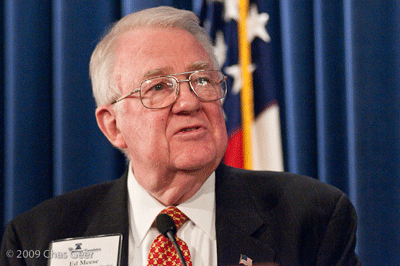
Statement by Former Attorney General Ed Meese on New York Terror Trials
Edwin Meese III, the Ronald Reagan Distinguished Fellow in Public Policy and Chairman of the Center for Legal and Judicial Studies at The Heritage Foundation as well as the United States Attorney General between 1985 and 1988 released the following statement today on the proposed trials of terrorists in New York City, including confessed 9/11 mastermind Khalid Sheikh Mohammed.“It is clear that foreign terrorists and terrorist groups have committed acts of war against the United States, and that our national security requires that we respond accordingly. This means that President Bush’s prudent actions and the military response which he led should continue as our answer to these attacks.
Congress overwhelmingly reaffirmed their commitment to military commissions in 2006, which have historically been the way that we respond to acts of war. To abandon our two centuries of tradition and to substitute some new civilian procedure as a response to such attacks endangers the security of our country and our national interest.
It was a tragic mistake to decide to abandon the prison facility at Guantanamo Bay, which was designed physically and legally to handle these types of cases. It is a further tragic mistake to now bring the detained war combatants into the United States and to employ civilian criminal procedures which were never intended for this type of situation.
The U.S. Constitution protects American citizens and visitors from the moment they are suspected of criminal wrongdoing through a potential trial. These same protections are not, have never, and should not be granted to enemy combatants in war, since it is clear that regardless of the outcome of the trial, these detainees will likely remain in the custody of the United States.”
Thursday, November 12, 2009
Heritage Foundation Videos on Death Tax and School Choice
http://www.myheritage.org/media/?videoID=48808611001
Sunday, September 13, 2009
Why the Stimulus Failed
This piece appeared in "National Review" recently and was written by Heritage Foundation's Brian Riedl. This is the best summary of why the stimulus failed. It is long, but well worth the read...
Why the Stimulus Failed
Fiscal policy cannot exnihilate new demand
Conservatives have correctly declared President Obama’s $787 billion “stimulus” a flop. In a January report, White House economists predicted the bill would create (not merely save) 3.3 million jobs. Since then, 2.8 million jobs have been lost, pushing unemployment toward 10 percent.
Yet few have explained correctly why the stimulus failed. By blaming the slow pace of stimulus spending (even though it’s ahead of schedule), many conservatives have accepted the premise that government spending stimulates the economy. Their thinking implies that we should have spent much more by now.
History proves otherwise. In 1939, after a doubling of federal spending failed to relieve the Great Depression, Treasury Secretary Henry Morgenthau said that “we have tried spending money. We are spending more than we have ever spent before and it does not work. . . . After eight years of this administration we have just as much unemployment as when we started . . . and an enormous debt to boot!”
This repeated failure has nothing to do with the pace or type of spending. Rather, the problem is found in the oft-repeated Keynesian myth that deficit spending “injects new dollars into the economy,” thereby increasing demand and spurring economic growth. According to this theory, government spending adds money to the economy, taxes remove money, and the budget deficit represents net new dollars injected. Therefore, it scarcely matters how the dollars are spent. John Maynard Keynes famously asserted that a government program paying people to dig and then refill ditches would provide new income for those workers to spend and circulate through the economy, creating even more jobs and income. Today, lawmakers cling to estimates by Mark Zandi of Economy.com that on average, $1 in new deficit spending expands the economy by roughly $1.50.
If that were true, the record $1.6 trillion in deficit spending over the past fiscal year would have already overheated the economy. Yet despite this spending, which is equal to fully 9 percent of GDP, the economy is expected to shrink by at least 3 percent this fiscal year. If the spending constitutes an injection of “new money” into the economy, we may conclude that, without it, the economy would contract 12 percent — hardly a plausible claim.
If $1.6 trillion in deficit spending failed to slow the economy’s slide, there’s no reason to believe that adding $185 billion — the 2009 portion of the stimulus bill — will suddenly do the trick. But if budget deficits of nearly $2 trillion are insufficient stimulus, how much would be enough? $3 trillion? $4 trillion?
This is no longer a theoretical exercise. The idea that increased deficit spending can cure recessions has been tested, and it has failed. If growing the economy were as simple as expanding government spending and deficits, then
The simple reason government spending fails to end recessions is that Congress does not have a vault of money waiting to be distributed. Every dollar Congress “injects” into the economy must first be taxed or borrowed out of the economy. No new income, and therefore no new demand, is created. They are merely redistributed from one group of people to another. Congress cannot create new purchasing power out of thin air.
This is intuitively clear in the case of funding new spending with new taxes. Yet funding new spending with new borrowing is also pure redistribution, since the investors who lend
Even during recessions — when total production falls, leaving people with less income to spend — Congress cannot create new demand and income. Any government spending that increases production at factories and puts unemployed individuals to work will be financed by removing funds (and thus idling resources) elsewhere in the economy. This is true whether the unemployment rate is 5 percent or 50 percent.
For example, many lawmakers claim that every $1 billion in highway stimulus will create 47,576 new construction jobs. But Congress must first borrow that $1 billion out of the private economy, which will then lose a roughly equivalent number of jobs. As transportation-policy expert Ronald Utt has explained, “the only way that $1 billion of new highway spending can create 47,576 new jobs is if the $1 billion appears out of nowhere as if it were manna from heaven.” Removing water from one end of a swimming pool and dumping it in the other end will not raise the overall water level. Similarly, moving dollars from one part of the economy to the other will not expand the economy. Not even in the short run.
Consider a simpler example. Under normal circumstances, a family might put its $1,000 savings in a certificate of deposit at the local bank. The bank would then lend that $1,000 to the local hardware store. This would have the effect of recycling that spending around the town, supporting local jobs. Now suppose that, induced by an offer of higher interest rates, the family instead buys a $1,000 government bond that funds the stimulus bill.
The mistaken view of fiscal stimulus persists because we can easily see the people put to work with government funds. We don’t see the jobs that would have been created elsewhere in the economy with those same dollars had they not been lent to
In his 1848 essay “What Is Seen and What Is Not Seen,” French economist Frédéric Bastiat termed this the “broken window” fallacy, in reference to a local myth that breaking windows would stimulate the economy by creating window-repair jobs. Today, the broken-window fallacy explains why thousands of new stimulus jobs are not improving the total employment picture.
Keynesian economists counter that redistribution can increase demand if the money is transferred from savers to spenders. Yet this “idle savings” theory assumes that savings fall out of the economy, which clearly is not the case. Nearly all individuals and businesses invest their savings or put it in banks (which in turn invest it or lend it out) — so the money is still being spent somewhere in the economy. Even in this recession, with tightened lending standards, banks are performing their traditional role of intermediating between those who have savings and those who need to borrow. They are not building extensive basement vaults to hoard cash.
Since the financial system transfers savings into investment spending, the only savings that drop out of the economy are those dollars literally hoarded in mattresses and safes — and there is no evidence that this is occurring en masse. And even if individuals, businesses, and banks did distrust the financial system enough to hoard their dollars, why would they suddenly lend them to the government to finance a stimulus bill?
Once the idle-savings theory collapses, so does all the intellectual support for government spending as stimulus. If there are no idle savings to acquire, then the government is merely borrowing purchasing power from one part of the economy and moving it into another part of the economy.
Even foreign borrowing is no free lunch. Before
I’ve purposely ignored the Federal Reserve, which actually can inject cash into the economy, but not in a way that constitutes stimulus. Congress can deficit-spend; Treasury can finance the deficit spending by issuing bonds; and the Federal Reserve can buy those bonds by printing money. Any economic boost is then due to the Federal Reserve’s actions, not the deficit spending — and of course the Federal Reserve will have to raise interest rates, slowing the economy again, to bring the resulting inflation under control.
If government spending doesn’t cause economic growth, what does? Growth happens when more goods and services are produced, and the only true source of this is an expanding labor force combined with high productivity. High productivity in turn requires educated and motivated workers, advanced technology, adequate infrastructure, physical capital such as factories and tools, and the rule of law.
Government spending could boost long-run productivity through investments in education and infrastructure — but only if politicians could target those investments better than the private sector would. And it turns out that politicians cannot outsmart the marketplace. Mountains of academic studies show that government spending generally reduces long-term productivity.
Furthermore, most government programs that could increase productivity don’t work fast enough to counteract a recession. Education spending cannot raise productivity until its student beneficiaries graduate and enter the work force. It can take more than a decade to build new highways and bridges.
The only policy proven to increase productivity in the short term is to lower tax rates and reduce regulation. Businesses can grow only through consistent investment and an expanding, skilled workforce. Cutting marginal tax rates promotes these conditions, by creating incentives to work, save, and invest.
It’s happened before. In 1981, President Reagan inherited an economy stagnating under the weight of 70 percent marginal income-tax rates. Under Reagan, the top rate fell to 28 percent, and the subsequent surge in investment and labor supply created the strongest 25-year economic boom in American history.
Such tax-rate reductions are superior to tax rebates designed to “put money in people’s pockets.” Rebates — like government spending — simply redistribute existing dollars. They don’t increase productivity because they don’t change incentives: No one has to work, save, or invest more to get a tax rebate. The 2001 and 2008 rebates failed because Congress borrowed money from investors and foreigners and redistributed it to families. Not surprisingly, any new personal-consumption spending was matched by corresponding declines in investment spending and net exports, and the economy remained stagnant.
If conservatives wish to provide economic leadership, they must get this argument right. The stimulus is not failing because it is too small or because too much of it is being saved. It’s failing because Congress can only redistribute existing demand, not create new demand. This recession will eventually end. The more serious, long-term danger is that President Obama’s Europeanization of the economy will bring the same slow growth, stagnant wages, job losses, high taxes, and lack of competitiveness that have plagued Western Europe, leaving the United States at an ever-growing disadvantage with Asian countries not so afflicted.
Mr. Riedl is a research fellow at the Heritage Foundation.

Monday, September 7, 2009
Rediscovering First Principles - A Constitutional Colloquium
I have created a web page on the ReaganConservatives.us site, which includes my audio recordings of some of the talks. I strongly encourage everyone to take a look and listen/download the talks. I have also included a PDF of the "First Principles Reader" produced by the three hosts, which is an excellent document to read and keep.
I will keep everyone informed of additional events like this in Washington. Special thanks to Heritage, Hillsdale, and Federalist Society for allowing me to record and create the page...
www.reaganconservatives.us/082409/
Tuesday, May 5, 2009
Limbaugh, Ryan, and "33 Minutes" Highlight Heritage Foundation's President's Club Events in Washington
Yesterday, I had the privilege of attending my 11th Heritage Foundation President's Club Meeting at the Ronald Reagan Building (where else?) in Washington. Here are some of the highlights from yesterday's events and my perspectives:- Attended the Young President's Club (YPC) luncheon with about 200 YPC members in attendance, about double the total who showed up to the November 2008 luncheon. Heritage announced that it is starting a new YPC membership drive to attract even greater numbers. The lunch talk featured Rob Bluey, Director of Online Strategy at Heritage, and Katherine Jean Lopez, National Review Online Editor. Kudos to John Fogarty, Director of Donor Relations, and his staff at Heritage for really trying to make a dent in the youth movement at Heritage. This has been an observed "gap" of Heritage's for many years and is an issue that I have written to Heritage senior executives about in the past. Glad to see they are finally going after the 18-25 demographic.
- After lunch and back in the main hall, Heritage Foundation President Dr. Ed Feulner discussed the current state of Conservatism in Washington and what activities are underway and planned at Heritage. He noted that Heritage has been working very hard over the past year to ramp up its Internet 2.0 efforts, which includes social networking on Facebook and Twitter. He was especially proud to announce that Heritage has added more than 110,000 new members to its rolls in the past year. In addition, the conference dinner would be attended by more than 1,000 members, the largest attended Heritage President's Club dinner ever. Of that total, about 250 YPC members would be attending.
- Rep. Paul Ryan of Wisconsin was most definitely the highlight of the early afternoon session as he provided his thoughts and ideas on Jack Kemp (whom he worked for...), the Obama Administration, and the Federal Reserve's monetary policy, to name a few. He is extremely articulate, has a solid game plan for addressing the Obama spending and tax plans, and looks like the "real deal" as a future national player in the Conservative Party. He received a standing ovation from the packed ballroom following his no-notes, no-teleprompter speech.
- In the late afternoon, Heritage members were treated to a viewing of the 60-minute version of "33 Minutes -- Protecting America in the New Missile Age", a documentary highlighting the need for a missile defense system. This is one of the most intense and convincing political documentaries of all time and should be seen by all Americans. If you have not seen the film, please visit the site (link above) and watch the trailer on-line. Better yet, sign up to get information about local showings in your area of the country. Heritage is in negotiations with several networks regarding on-air viewings. Great job by Heritage on this important issue!
- Before the dinner reception, I had the opportunity to purchase a signed copy of Heritage's Senior Communications Fellow Rebecca Hagelin's new book, "30 Ways in 30 Day to Save Your Family". Rebecca has been an invaluable asset to Heritage over the past several years as its VP for Communications. Most recently, she served as Executive Producer of "33 Minutes" and now has written her second book on pro-family issues.
- The nightcap of the day's events, as always, is the dinner and keynote speech. Before a packed atrium at the Reagan Building, Dr. Feulner welcomed the group and made special mention of Supreme Court Justice Clarence Thomas' attendance, which drew a standing ovation from the audience. Unfortunately, Rush Limbaugh was running late for the event, but did get there after the dinner and dessert and hit a home run with an hour-long speech. The message of his speech is that the Conservative Party/Reagan Revolution is not dead and that the party needs to be a leader and teacher for Americans about First Principles and why much of the Obama plan will not work. He stressed that we cannot simply go out and ask Americans what they want and build a party platform around those responses. I will try and post portions of Rush's speech as they become available on the Net.
Thursday, April 23, 2009
Obama's Spending vs. Obama's Spending Cuts
According to reports, President Obama earlier this week asked his Cabinet members to identify a combined $100 million in budget cuts over the next 90 days. Just how laughable is Obama’s latest stunt to try to maintain his “fiscal responsibility” credentials? Wednesday, February 18, 2009
An Open Letter from Heritage to the Congress and the POTUS
For the last 35 years, educators and analysts at The Heritage Foundation have been intimately involved in the nation's great public policy debates. In all that time, we have never encountered legislation with such far-reaching and revolutionary policy implications as the American Recovery and Reinvestment Act currently before Congress. And never have we seen a bill more cloaked in secrecy or more withdrawn from open public exposure and honest debate.
In addition to being the single most expensive bill ever proposed, this measure calls for a massive expansion of the federal government's reach into the day-to-day life of virtually every citizen, business and civic organization in the nation. That, in itself, should be the subject of an extensive public conversation and thoughtful debate. Instead, we have seen Congressional leaders schedule snap votes on a 1,434-page bill that no one—repeat, no one—has had a chance to read in its entirety, much less digest and deliberate.
This bill has been advertised as an economic stimulus bill—despite the fact that the Congressional Budget Office estimates it will actually weaken our nation's long-term economic growth. While the stimulative utility of the bill is, at best, questionable, it would unquestionably rewrite the social contract between the American people and their government. For example:
(1) The bill reverses the bipartisan and highly successful welfare reforms of 1996 and drastically expands the welfare state. For instance, it will start rewarding states for adding people to their welfare rolls, rather than for helping them find gainful employment. And contrary to long-established practice, it will entitle able-bodied adults without children to receive cash assistance.
(2) It does extreme violence to the concept of federalism—bailing out states that have spent irresponsibly at the expense of taxpayers in states that have been fiscally prudent.
(3) It greatly shifts the responsibility and power over health care delivery and decision making from individuals to government. Among other things, it would create a new federal health board to decide which medical services are "effective" in America, paving the way for government effectively to overrule the clinical decisions of private physicians.
(4) It deliberately censors religious speech and worship on school campuses by prohibiting use of any "stimulus" funds for facilities that are used for sectarian instruction, religious worship, or a school of divinity.
The list goes on. These and similar provisions will mean fundamental changes in our society. In many instances, the bill would establish policies that directly challenge widely held American values.
We are appalled that Congress is even contemplating such profound changes with so little openness and due diligence. In the past, major policy changes in our welfare system, or health care, or trade policies, etc., were always, quite properly, preceded by extensive public conversation and full debate. That is how a democracy should make important decisions.
The failure of Congress and the Administration to allow that debate is damaging to our democracy. Both chambers of Congress suspended their budget rules to push it along. And both the President and the leaders of the House and Senate have violated their solemn promises that the bill would be available for several days of public review prior to voting, so that the American people might have a chance to learn what is in the bill and to make their views known to their elected officials.
This reckless approach to governance can only undermine public faith in our elected officials and our government as a whole. We call on Congress and the Administration to live up to their promises and stated ideals, and give the democratic process a chance to work.
Ed Feulner is president of The Heritage Foundation
Tuesday, February 10, 2009
Yesterday’s Top 5 Most Audacious Obama Statements
Yesterday the Pew Research Center released a new poll on the economic stimulus debate. Like every other poll taken so far, the Pew poll showed again that support for President Obama's Trillion Dollar Debt Plan has fallen since it was first announced. While 92% of those polled viewed Obama as a good communicator, those Americans that were paying the most attention to the stimulus debate also were the most opposed to the plan. The more that Obama's lofty rhetoric is tested against fact and common sense, the less support his policies have. Below are just the five most audacious sales pitches Obama employed to gin up support for his Trillion Dollar Debt Plan.
No Earmarks: "What it does not contain, however, is a single pet project, not a single earmark, and it has been stripped of the projects members of both parties found most objectionable." - This is a clever semantic ploy by Obama. While it is true that no individual Congressman stuffed a Bridge to Nowhere in the bill's conference report, when Speaker Nancy Pelosi (D-CA) and Rep. David Obey (D-WI) wrote the bill, they included billions of line-item spending elements to payoff leftist interest groups, including: $450 million for NASA "climate-research missions”, $600 million for NOAA “climate modeling”, $2 billion for a single power plant in Obama's home state of Illinois, and on and on.
4 Million Jobs: "My bottom line is to make sure that we are saving or creating 4 million jobs." -Obama is not creating 4 million jobs. According to the Congressional Budget Office, under the most optimistic models Obama's Trillion Dollar Debt Plan would create only 3.6 million jobs and could produce only 1.2 million jobs. And one in five of these jobs will be a government job.
Spending: "Look, I would love not to have to spend money right now. This notion that somehow I came in here just ginned up to spend $800 billion, that wasn't -- that wasn't how I envisioned my presidency beginning." - Obama's chief of staff exposed this lie when he said;" Never allow a crisis to go to waste…They are opportunities to do big things." But the bill itself is all the proof you need to know that Obama and his leftist allies thoroughly love their chance to blow a trillion dollars. The Obama Trillion Dollar Debt Plan doubles the size of the Department of Education and creates 32 brand new government programs. Worse, it sneaks in a major down payment on Obama's health care plan creating the bureaucracy and tracking systems necessary to force socialized medicine on the American people.
Free Lunches: "Once the economy stabilizes and people are less fearful, then I do think that we're going to have to start thinking about how do we operate more prudently, because there's no such thing as a free lunch." - Obama's Trillion Dollar Debt Plan is founded on the belief that government's can provide endless free lunches to the American people. Does Obama believe the trillions he wants to spend grows on trees? Nobel laureate Gary Becker writes: "There are no free lunches in spending, public or private. The increased federal debt caused by this stimulus package has to be paid for eventually by higher taxes on households and businesses. ... The burden from higher taxes down the road has to be deducted both from any short-term stimulus provided by the spending program, and from its long-run effects on the economy."
Japan: "We saw this happen in Japan in the 1990s, where they did not act boldly and swiftly enough, and as a consequence they suffered what was called the "lost decade" where essentially for the entire '90s they did not see any significant economic growth." - This statement is audacity defined. Since 1992 Japan has spent $6.3 trillion in stimulus spending, racking up the largest public debt in the developed world — totaling 180 percent of its $5.5 trillion economy. And this massive borrow-and-spend splurge did nothing to help the economy. And Obama thinks this is evidence in support of his Trillion Dollar Debt Plan?
No wonder support for Obama's economic stimulus plan is sinking like a rock.
Saturday, January 31, 2009
Heritage Foundation Releases Research on Homeschooling
Growing Homeschooling Movement
The report shows that approximately 1.5 million children (2.9 percent of school-age children) were being homeschooled in the spring of 2007, representing a 36 percent relative increase since 2003 and a 74 percent relative increase since 1999.[1] One private researcher estimates that as many as 2.5 million school-age children were educated at home during the 2007-2008 school year.[2]
The homeschooling survey also reveals the most common reasons cited by families as the basis for their decision to educate their children at home. The most frequently referenced reasons included the ability to provide moral or religious instruction (36 percent), concern about the environment at other schools (21 percent), and dissatisfaction with the academic instruction provided at other schools (17 percent).[3] The number of parents reporting the ability to provide moral or religious instruction as a rationale for homeschooling their children increased by 11 percentage points (from 72 percent in 2003 to 83 percent in 2007).[4]
Additional reasons parents homeschooled their children included "other" reasons (14 percent), desire for nontraditional education (7 percent), special needs (4 percent), and physical or mental health problems (2 percent).[5] There was a 12 percentage point increase in the amount of respondents choosing "other" reasons, from 20 percent in 2003 to 32 percent in 2007. This increase could indicate an expansion in the types of demographic groups homeschooling their children.[6]
Benefits of Homeschooling
The available evidence suggests that homeschooling students perform as well as their non-homeschooled counterparts. In general, homeschooled students perform as well as--and in some cases outperform--their non-homeschooled peers.[7]
Homeschooled students succeed academically regardless of family income or teacher certification of parents.[8] Top-tier colleges and universities also recognize the academic abilities of homeschooled students, with Stanford, Yale, and Harvard among the institutions with the most homeschool-friendly policies.[9]
An additional benefit of homeschooling comes in the form of savings to taxpayers and school systems. Analysts have estimated that homeschooled students save American taxpayers and public schools between $4.4 billion and $9.9 billion annually.[10] Other estimates are as high as $16 billion.[11]
Trends and Anticipated Growth
Homeschooling may be the fastest growing form of education in the U.S.,[12] rivaled only by charter schools.[13] The 74 percent increase in homeschooling since 1999 alone suggests continued future growth. The homeschooling movement has also gained traction among minority students, which represent approximately 15 percent of homeschooling families.[14]
The continued growth in homeschooling is facilitated by organizations that assist families with needs ranging from curriculum and instruction to advancing legislation that ensures the freedom to educate children in the home. These burgeoning networks demonstrate that homeschooling is becoming an increasingly viable option for families.
Homeschooling continues to broaden and grow because of the vast array of education options and flexibility it provides for families. This crucial component of education reform creates an additional alternative for parents and students. It is estimated that more than 1 million children attend charter schools or benefit from voucher programs in the United States--a figure on par with the more than 1.5 million estimated homeschooled students. Economists have found that the competitive effects of school choice programs have prompted improvement in public schools.[15] While more research is needed, the homeschooling movement could be taking part in the same trend.
Protecting Homeschooling
Legal rights to homeschooling have been established nationwide, facilitating the growth of home-based instruction. Presently, homeschooling is legal in every state. Policymakers should protect parents' rights to homeschool their children and enact reforms that remove barriers to homeschooling. In order to provide meaningful protections to homeschooling families, Members of Congress should avoid restrictive regulations at all levels of schooling and offer tax relief to homeschoolers through education tax credits or deductions. Homeschooling families provide a valuable contribution to American education, often while incurring a significant financial burden in addition to their taxes paid toward public education. Policies should recognize the educational contribution of homeschooling and ensure that the freedom to homeschool is permanently protected and fostered.
In view of all the benefits that homeschooling provides to homeschooled children as well as society as a whole, lawmakers should enact policies that give more families the opportunity to participate in homeschooling. Federal and state policymakers should work to guarantee that families have the freedom to educate their children at home in the future.
(This report was produced by Lindsey M. Burke, Research Assistant in the Domestic Policy Studies Department at The Heritage Foundation)
[1]U.S. Department of Education, National Center for Education Statistics, "1.5 Million Homeschooled Students in the United States in 2007," December 2008, at http://nces.ed.gov/pubs2009/2009030.pdf (January 6, 2009).
[2]Brian D. Ray, "Research Facts on Homeschooling," National Home Education Research Institute, July 2, 2008, at http://www.nheri.org/Research-Facts-on-Homeschooling.html (January 6, 2009).
[3]National Center for Education Statistics, "1.5 Million Homeschooled Students."
[4]Ibid.
[5]Ibid.
[6]Janice Lloyd, "Home Schooling Grows," USA Today, January 6, 2009, at http://www.usatoday.com/news/education/2009-01-04-homeschooling_N.htm (January 22, 2009).
[7]A 1998 report by Lawrence Rudner of the University of Maryland found that homeschooled students performed well on tests of academic achievement, typically scoring in the 70th and 80th percentiles. Lawrence M. Rudner, "Scholastic Achievement and Demographic Characteristics of Home School Students in 1998," Education Policy Analysis Archives, Vol. 7, No. 8 (March 23, 1999), at http://epaa.asu.edu/epaa/v7n8/ (January 22, 2009). See Dan Lips and Evan Feinberg, "Homeschooling: A Growing Option in American Education," Heritage Foundation Backgrounder No. 2122, April 3, 2008, at http://www.heritage.org/Research/Education/bg2122.cfm.
[8]Ray, "Research Facts on Homeschooling."
[9]Home School Legal Defense Association, "Home Schoolers in Ivy League Universities," May 3, 2000, at http://www.hslda.org/docs/nche/000002/00000234.asp (January 22, 2009).
[10]Lips and Feinberg, "Homeschooling."
[11]Ray, "Research Facts on Homeschooling."
[12]Ibid.
[13]Forty states and the District of Columbia saw the introduction of 355 new charter schools during the 2008-2009 school year. Center for Education Reform, "Charter School Facts," September 18, 2007, at http://www.edreform.com/index.cfm?fuseAction=document&documentID=1964 (January 27, 2009).
[14]Ibid.
[15]Caroline Minter Hoxby, "Rising Tide," Education Next, Vol. 1, No. 4 (Spring 2001), at www.educationnext.org/20014/68.html (November 2, 2007), quoted in Lips and Feinberg, "Homeschooling."
Thursday, January 29, 2009
“Stimulus” 101 Update: The Trillion Dollar Spending Plan Passes House
Small victories have been won. First, we applaud conservatives for sticking together against a plan that offers no bipartisan solution to America’s economic problems. While bipartisanship was the talking point du jour this week, it was not evident in the actual language of the bill which was written by a precious few. Second, we applaud President Obama for asking Speaker Pelosi to rightly remove the provisions for family planning and re-sodding the National Mall. While countless other projects like this remain, it was a welcome sight to see the President in total agreement on these two, when pressed. Third, we applaud the bipartisan spirit in the U.S. Senate when they joined together to support one more year of relief from Alternative Minimum Tax. Despite the Obama Administration urging them not to do so, Senators from both sides of the aisle were able to see that protecting as many as 24 million working families from tax increases during these tough economic times, is the right kind of ’stimulus’.
Now the bill moves to the Senate where we hope it will receive more debate, more input and more relief for working families. While we appreciate the enthusiasm by the Left to enact their liberal agenda as quickly as possible, a stimulus bill should create jobs not push social programs. While Congress rallies against corporate bonuses and jets, they should also refrain from rewarding themselves with a One Trillion Dollar Signing Bonus.
Below is an updated ‘101′ index as to why Spending Does Not Equal Stimulus:
HIGH COST TO AMERICAN TAXPAYERS
After Congress appropriates the FY’09 omnibus bill, they may have spent over $1.6 Trillion in less than one month! The current “stimulus bill” is on track to be the LARGEST SPENDING BILL EVER enacted by Congress, making the New Deal look small in today’s dollars. 2010 spending in this bill is more than double New Deal spending in 1936.
According to the Congressional Budget Office, the cost of borrowing this money is estimated at over $347 billion, bringing the total cost of the spending package to well over $1.1 Trillion.
The “Stimulus” Bills Your Family – $819 Billion is equivalent to borrowing $10,520 from EVERY FAMILY IN AMERICA. This borrowed money is equivalent to what the average family spends on food, clothing, and health care in an entire year.
If Government Spending solved recessions, we would never have recessions.
BAD IDEAS – “THE DEVIL IN DISGUISE”
The hidden liberal policy agenda inside the ‘stimulus bill’:
Over $142 Billion in Federal education funds: Nearly double the total outlays for the Dept. of Education in 2007 – making good on Reid-Pelosi-Obama education promises to the NEA.
$87 Billion Medicaid bailout: If we keep bailing states out without any accountability, they will have every incentive to continue irresponsible spending. It forces fiscally responsible taxpayers in states, like Indiana, to pay for the fiscally irresponsible decisions by bureaucrats in states like Illinois.
Expanded Medicaid coverage and SCHIP: Congress is using the stimulus to push forward their liberal health care agenda. This incremental strategy will ultimately move the country closer the tipping point where government will control more health care spending than the private sector – leaving individuals and families will less control over their personal health care decisions.
Green Jobs?: The myth of ‘green jobs’ merely means replacing one job lost, with a new job that fits the left’s agenda. It is a zero sum game. More than doubling spending, the stimulus also has over $35 billion for the Dept. of Energy. DOE’s current budget is $23.8 billion.
Redistribution: Refundable “Make Work Pay” Tax Credits for people who don’t pay taxes
Pork Spending: TV Coupons ($650 M), Nat’l Endowment for the Arts ($50 M), Hollywood ($246 M)
BAD RESULTS
No Jobs: While they have not been able to support these claims, Pelosi/Obama promise between 3 & 4 million jobs, yet House Tax Committee staff can’t estimate even ONE job will be created.
Ineffective: The Congressional Budget Office estimates that only 52% of the spending in the ‘stimulus’ bill can even be spent by the end of FY’10. Well short of the 75% benchmark.
“We have tried spending money. We are spending more than we have ever spent before and it does not work.” – FDR’s Treasury Sec. Henry Morgenthau Jr., architect of the New Deal.
BETTER IDEAS – TWICE THE JOBS, HALF THE COST
(1) Make the 2001 and 2003 Tax Cuts permanent, instead of raising taxes in 2011; Reduce Marginal Tax Rates for Individuals and Businesses by 10% creating new jobs. Adopting just this one proposal would create between 500,000 and 1 million jobs in one year.
(2) Reduce the Death Tax to at least 15% ($5 mil. individual exclusion)
(3) Enact long-term reforms and budgets for entitlement spending, putting long-term obligations from Social Security, Medicare and Medicaid, front and center in the budget process.
(4) Assess and enforce long term spending rules in Congress. Get us out of debt!
(Source: Heritage Foundation)
Questions? Contact webmaster@ReaganConservatives.us
Copyright © 2008-2011, www.ReaganConservatives.us. All rights reserved.